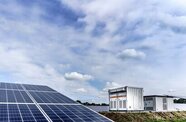
Grenergy has completed the sale of its flagship energy storage project in Chile, Gabriela, to CVC DIF. Gabriela is the fourth phase of Oasis de Atacama and is part of a portfolio totalling 272 MW of solar capacity and 1,100 MWh of battery storage.
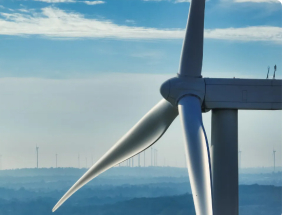
Suzlon has secured a maiden 200 MW wind energy order from Ayana Renewable Power Limited. This marks Suzlon's third DevCo-led wind order across two states - Madhya Pradesh and Andhra Pradesh. With this order, Suzlon's flagship 3.x MW platform, S144, has also crossed the 10 GW milestone.
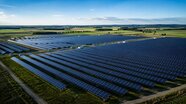
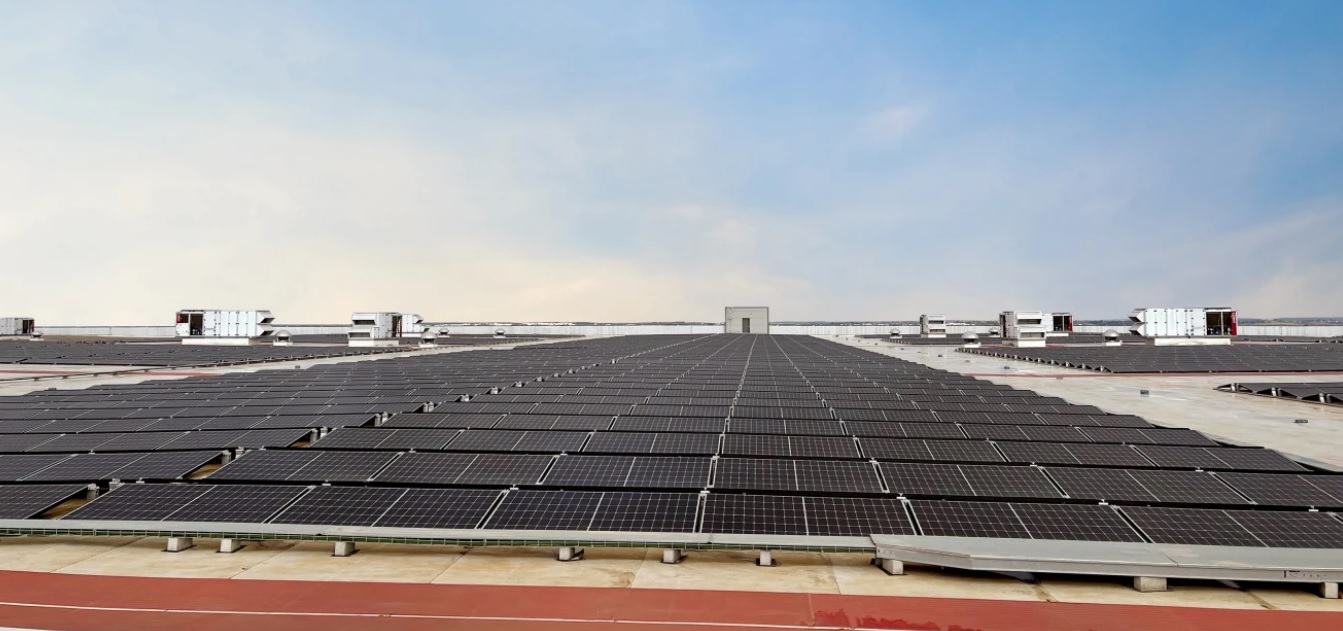
New data gathered in a report commissioned by Real Estate:UK in partnership with Forsters and Push Power Ltd, and authored by Cushman & Wakefield, shows untapped commercial real estate solar capacity could generate the equivalent of almost 20 nuclear power stations and power 20 million homes.
Regional solid waste, recycling and resource management services company Casella Waste Systems, Inc. has joined with Waga Energy to announce the start of operations at the RNG production facility at the McKean Landfill in Mount Jewett, Pennsylvania.
On Sept. 3, the U.S. Department of Energy’s Hydrocarbons and Geothermal Energy Office announced the establishment of a Geothermal Center of Excellence on the National Laboratory of the Rockies’ campus to help advance geothermal energy through collaboration, research, and innovation.
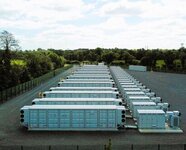
East Point Energy, a wholly owned Equinor company, has completed construction and started operations at Citrus Flatts, a 100 MW/200 MWh energy storage facility in Harlingen, Texas. With this Equinor has put five battery storage facilities into commercial production in four years
Governor Janet Mills has announced that her administration has awarded $4.7 million in grants to 72 cities, towns, and Tribal governments to support 63 community-led projects that will improve energy efficiency and help Maine communities become more resilient to the effects of climate change.
Producing hydrogen is essential for some of the world’s biggest industrial and agricultural needs, but it also comes with a steep environmental cost: most hydrogen made today is generated through processes that release large amounts of CO2. This is due to a combination of high-heat requirements and direct emissions resulting from the process. Now, Stanford researchers have developed a new, highly efficient way to make hydrogen that drastically reduces CO2 emissions and comes with an unexpected and potentially valuable byproduct.
Over 90 percent of UK councils now offer at least one public electric vehicle (EV) charger within their constituency, but work is still needed to support those looking for on-street access, according to research by Vauxhall. Â
Andreas Atkins tells REM that expanding the UK’s EV charging network requires early investment to manage grid, planning and cost constraints as demand grows.
Bajo su alianza Green Molecules to Green Steel (G2G), el eje central del proyecto lo componen las energÃas basadas en moléculas verdes —como biogás y biometano, hidrógeno renovable y sus derivados y los biocombustibles de segunda generación— y su uso para acelerar la transición al acero producido con bajas emisiones de CO2 económicamente viable, conectando la transición energética con la descarbonización de la siderurgia europea.